 TESTED 13 Jul
SECRET-SEN Online Practice Questions and Answers
During the configuration of Conjur, what is a possible deployment scenario?
A. The Leader and Followers are deployed outside of a Kubernetes environment; Slandbys can run inside a Kubernetes environment.
B. The Conjur Leader cluster is deployed outside of a Kubernetes environment; Followers can run inside or outside the environment.
C. The Leader cluster is deployed outside a Kubernetes environment; Followers and Standbys can run inside or outside the environment.
D. The Conjur Leader cluster and Followers are deployed inside a Kubernetes environment.
Followers are replications of the Leader configured for which purpose?
A. synchronous replication to ensure that there is always an up-to-date database
B. asynchronous replication from the Leader which allows secret reads at scale
C. asynchronous replication from the Leader with read/write operations capability
D. synchronous replication to ensure high availability
When installing the CCP and configuring it for use behind a load balancer, which authentication methods may be affected? (Choose two.)
A. Allowed Machines authentication
B. [Client Certificate authentication
C. OS User
D. Path
E. Hash
A customer wants to minimize the Kubernetes application code developers must change to adopt Conjur for secrets access.
Which solutions can meet this requirement? (Choose two.)
A. CPM Push-to-File
B. Secrets Provider
C. authn-Azure
D. Secretless
E. Application Server Credential Provider
What is the correct process to upgrade the CCP Web Service?
A. Run "sudo yum update aimprv" from the CLI.
B. Double-click the Credential Provider installer executable and select upgrade.
C. Double-click the AimWebService.msi and select upgrade.
D. Uninstall and reinstall the CCP Web Service.
While retrieving a secret through REST, the secret retrieval fails to find a matching secret. You know the secret onboarding process was completed, the secret is in the expected safe with the expected object name, and the CCP is able to provide secrets to other applications.
What is the most likely cause for this issue?
A. The application ID or Application Provider does not have the correct permissions on the safe.
B. The client certificate fingerprint is not trusted.
C. The service account running the application does not have the correct permissions on the safe.
D. The OS user does not have the correct permissions on the safe
Refer to the exhibit.
In which example will auto-failover occur?
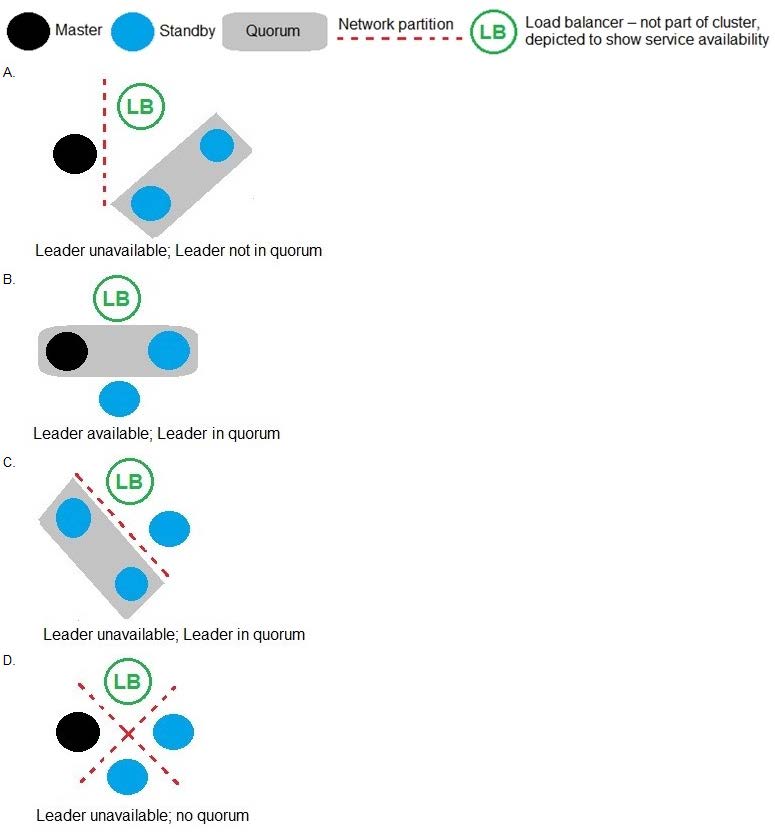
A. Option A
B. Option B
C. Option C
D. Option D
A Kubernetes application attempting to authenticate to the Follower load balancer receives this error:
ERROR: 2024/10/30 06:07:08 authenticator.go:139: CAKC029E Received invalid response to certificate signing request. Reason: status code 401 When checking the logs, you see this message:
authn-k8s/prd-cluster-01 is not enabled
How do you remediate the issue?
A. Check the info endpoint on each Follower behind the load balancer and enable the authenticator on the Follower.
B. Modify conjur.conf in /opt/conjur/etc/authenticators addinqthe authenticator webservice.
C. A network issue is preventing the application from reaching the Follower; correct the issue and verity that it is resolved.
D. Enable the authenticator in the Ul > Webservices > Authenticators > Enable and enable the appropriate authenticator webservice.
DRAG DROP
Match each scenario to the appropriate Secrets Manager solution.
Select and Place:
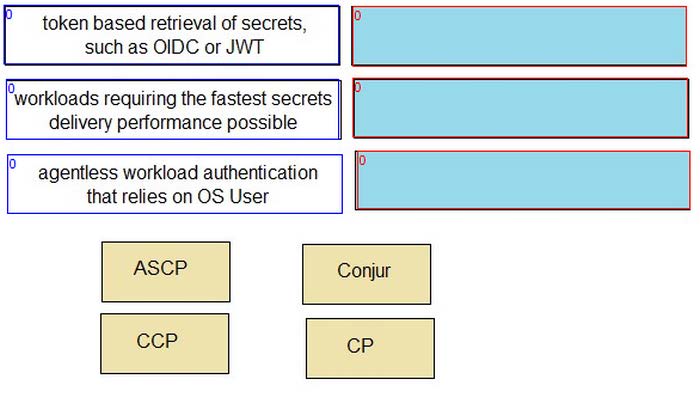
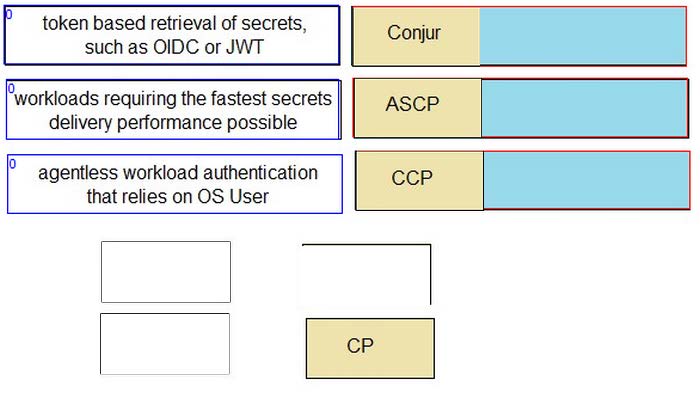
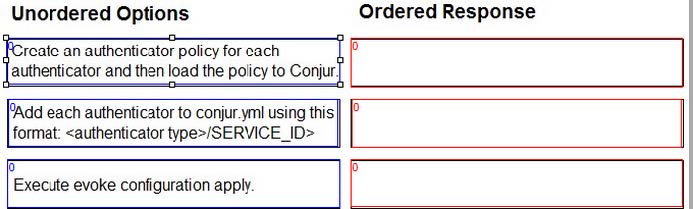
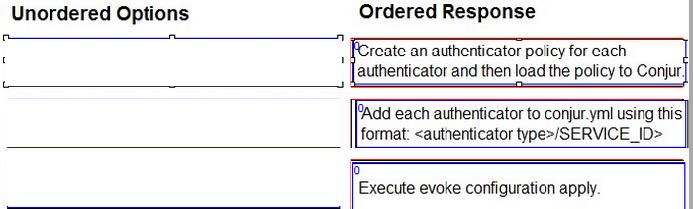
DRAG DROP
Arrange the steps to configure authenticators in the correct the sequence.
Select and Place:

Home | Contact Us | About Us | FAQ | Guarantee & Policy | Privacy & Policy | Terms & Conditions | How to buy
Copyright © 2026 pass4itsure.com. All Rights Reserved