 TESTED 21 Jul
NSE7_EFW-6.4 Online Practice Questions and Answers
View the exhibit, which contains the output of a diagnose command, and then answer the question below.
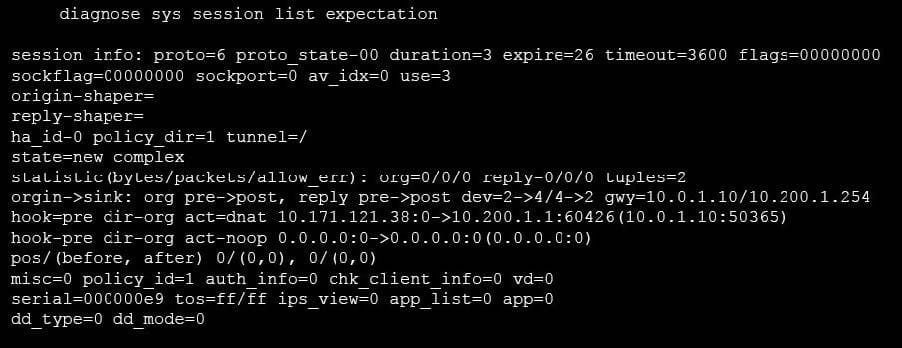
What statements are correct regarding the output? (Choose two.)
A. This is an expected session created by a session helper.
B. Traffic in the original direction (coming from the IP address 10.171.122.38) will be routed to the next-hop IP address 10.0.1.10.
C. Traffic in the original direction (coming from the IP address 10.171.122.38) will be routed to the next-hop IP address 10.200.1.1.
D. This is an expected session created by an application control profile.
Two independent FortiGate HA clusters are connected to the same broadcast domain. The administrator has reported that both clusters are using the same HA virtual MAC address. This creates a duplicated MAC address problem in the network. What HA setting must be changed in one of the HA clusters to fix the problem?
A. Group ID.
B. Group name.
C. Session pickup.
D. Gratuitous ARPs.
Examine the following traffic log; then answer the question below.
date-20xx-02-01 time=19:52:01 devname=master device_id="xxxxxxx" log_id=0100020007 type=event subtype=system pri critical vd=root service=kemel status=failure msg="NAT port is exhausted."
What does the log mean?
A. There is not enough available memory in the system to create a new entry in the NAT port table.
B. The limit for the maximum number of simultaneous sessions sharing the same NAT port has been reached.
C. FortiGate does not have any available NAT port for a new connection.
D. The limit for the maximum number of entries in the NAT port table has been reached.
View the exhibit, which contains a screenshot of some phase-1 settings, and then answer the question below.
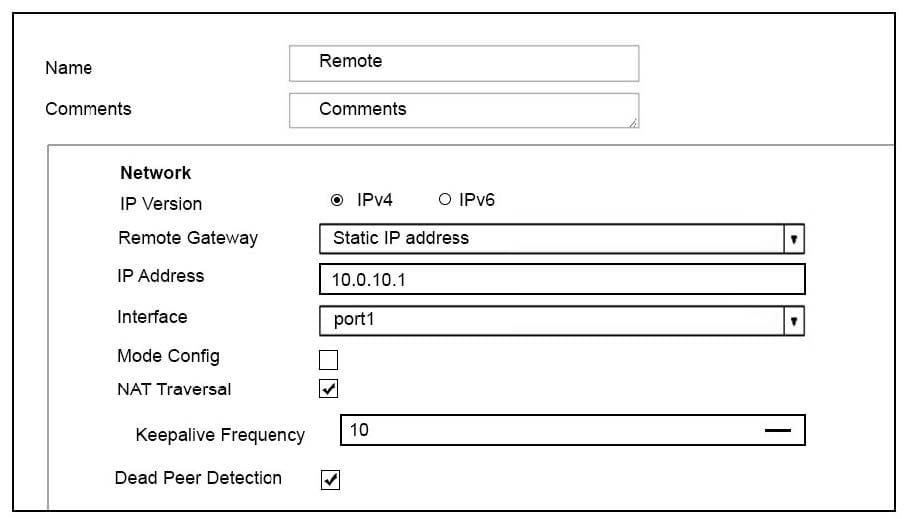
The VPN is up, and DPD packets are being exchanged between both IPsec gateways; however, traffic cannot pass through the tunnel. To diagnose, the administrator enters these CLI commands:

However, the IKE real time debug does not show any output. Why?
A. The debug output shows phases 1 and 2 negotiations only. Once the tunnel is up, it does not show any more output.
B. The log-filter setting was set incorrectly. The VPN's traffic does not match this filter.
C. The debug shows only error messages. If there is no output, then the tunnel is operating normally.
D. The debug output shows phase 1 negotiation only. After that, the administrator must enable the following real time debug: diagnose debug application ipsec -1.
What is the diagnose test application ipsmonitor 99 command used for?
A. To enable IPS bypass mode
B. To provide information regarding IPS sessions
C. To disable the IPS engine
D. To restart all IPS engines and monitors
Which two statements about FortiManager is true when it is deployed as a local FDS? (Choose two.)
A. It caches available firmware updates for unmanaged devices.
B. It can be configured as an update server, or a rating server, but not both.
C. It supports rating requests from both managed and unmanaged devices.
D. It provides VM license validation services.
View the exhibit, which contains the output of a web diagnose command, and then answer the question below.
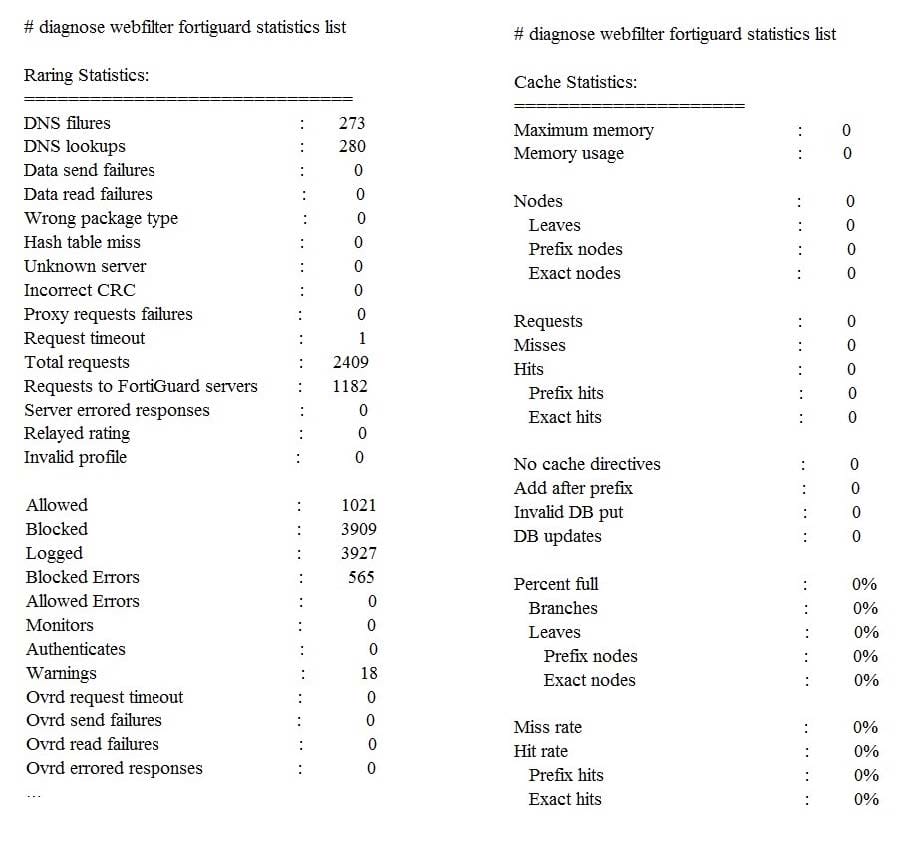
Which one of the following statements explains why the cache statistics are all zeros?
A. The administrator has reallocated the cache memory to a separate process.
B. There are no users making web requests.
C. The FortiGuard web filter cache is disabled in the FortiGate's configuration.
D. FortiGate is using a flow-based web filter and the cache applies only to proxy-based inspection.
An administrator added the following Ipsec VPN to a FortiGate configuration: configvpn ipsec phasel -interface edit "RemoteSite" set type dynamic set interface "portl" set mode main set psksecret ENC LCVkCiK2E2PhVUzZe next end config vpn ipsec phase2-interface edit "RemoteSite" set phasel name "RemoteSite" set proposal 3des-sha256 next end However, the phase 1 negotiation is failing. The administrator executed the IKF real time debug while
attempting the Ipsec connection. The output is shown in the exhibit.
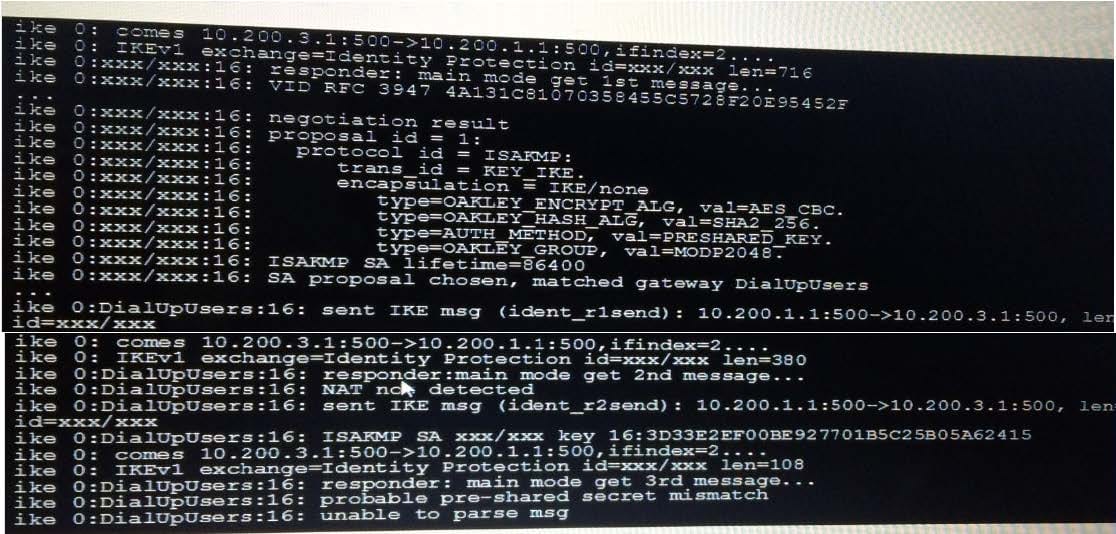
What is causing the IPsec problem in the phase 1 ?
A. The incoming IPsec connection is matching the wrong VPN configuration
B. The phrase-1 mode must be changed to aggressive
C. The pre-shared key is wrong
D. NAT-T settings do not match
A FortiGate's portl is connected to a private network. Its port2 is connected to the Internet. Explicit web proxy is enabled in port1 and only explicit web proxy users can access the Internet. Web cache is NOT enabled. An internal web proxy user is downloading a file from the Internet via HTTP. Which statements are true regarding the two entries in the FortiGate session table related with this traffic? (Choose two.)
A. Both session have the local flag on.
B. The destination IP addresses of both sessions are IP addresses assigned to FortiGate's interfaces.
C. One session has the proxy flag on, the other one does not.
D. One of the sessions has the IP address of port2 as the source IP address.
Refer to the exhibit, which contains the partial output of a diagnose command.
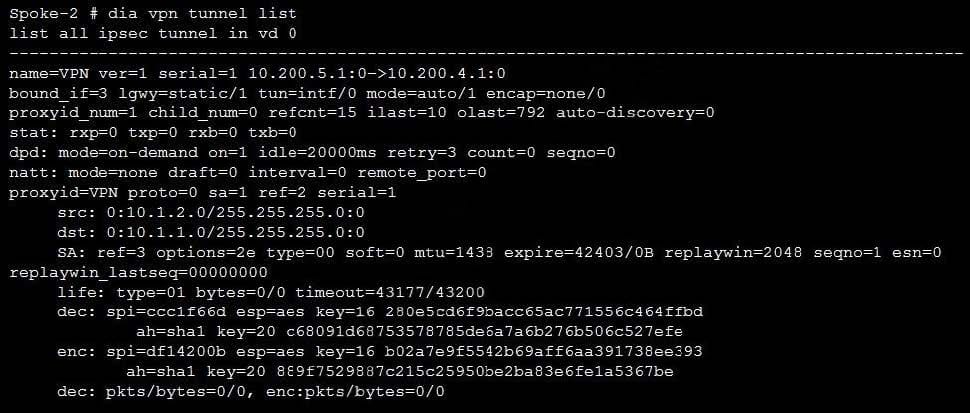
Based on the output, which two statements are correct? (Choose two.)
A. Anti-replay is enabled
B. The remote gateway IP is 10.200.4.1.
C. DPD is disabled.
D. Quick mode selectors are disabled.

Home | Contact Us | About Us | FAQ | Guarantee & Policy | Privacy & Policy | Terms & Conditions | How to buy
Copyright © 2026 pass4itsure.com. All Rights Reserved