 TESTED 25 Jul
NSE5_FMG-6.2 Online Practice Questions and Answers
Refer to the exhibit.
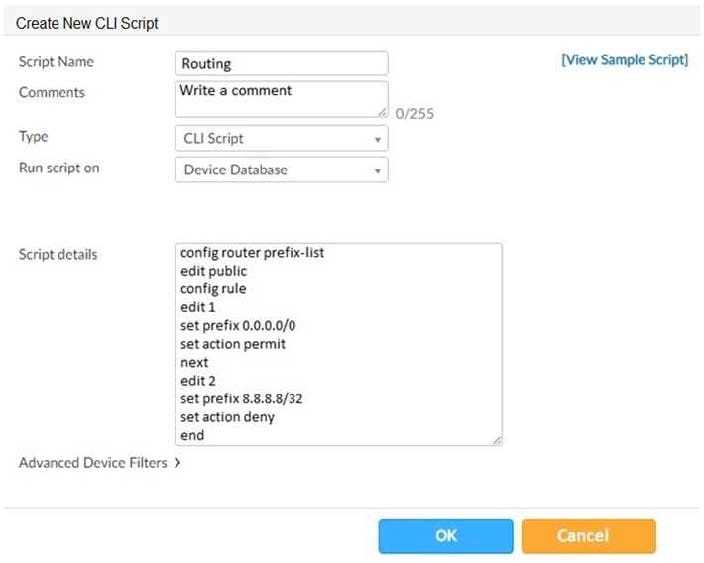
Which two statements are true if the script is executed using the Device Database option? (Choose two.)
A. You must install these changes using the Install Wizard to a managed device
B. The successful execution of a script on the Device Database will create a new revision history
C. The script history will show successful installation of the script on the remote FortiGate
D. The Device Settings Status will be tagged as Modified
Refer to the exhibit.
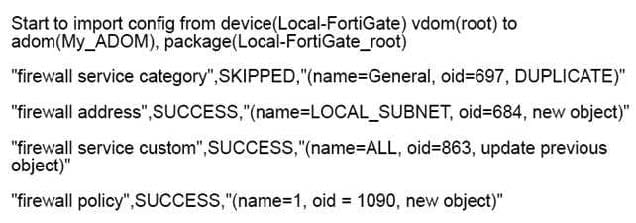
Which statement about the object named ALL is true?
A. FortiManager updated the object ALL using the FortiGate value in its database.
B. FortiManager installed the object ALL with the updated value.
C. FortiManager created the object ALL as a unique entity in its database, which can be only used by this managed FortiGate.
D. FortiManager updated the object ALL using the FortiManager value in its database.
What will be the result of reverting to a previous revision version in the revision history?
A. It will install configuration changes to managed device automatically
B. It will tag the device settings status as Auto-Update
C. It will generate a new version ID and remove all other revision history versions
D. It will modify the device-level database
Refer to the exhibit.
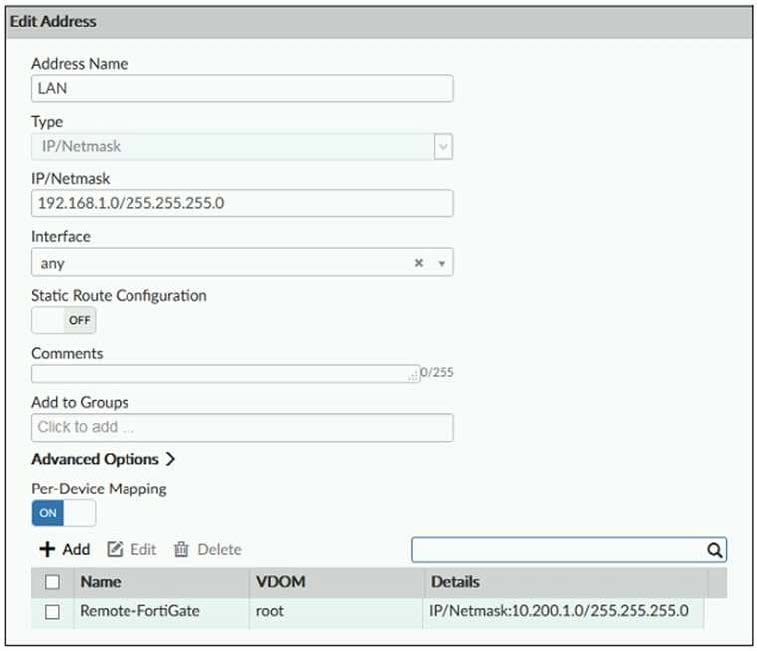
An administrator has created a firewall address object which is used in multiple policy packages for multiple FortiGate devices in an ADOM.
When the installation operation is performed, which IP/Netmask will be installed on managed devices for this firewall address object?
A. 192.168.0.1/24 on Remote-FortiGate
B. 10.200.1.0/24 on Remote-FortiGate
C. If no dynamic mapping is defined for other FortiGate devices, the object will not be installed
D. The FortiManager administrator can choose the value for the firewall address object in the Install Wizard for Remote-FortiGate
Which of the following conditions trigger FortiManager to create a new revision history? (Choose two.)
A. When configuration revision is reverted to previous revision in the revision history
B. When FortiManager installs device-level changes to a managed device
C. When FortiManager is auto-updated with configuration changes made directly on a managed device
D. When changes to device-level database is made on FortiManager
In addition to the default ADOMs, an administrator has created a new ADOM named Training for FortiGate devices. The administrator sent a device registration to FortiManager from a remote FortiGate. Which one of the following statements is true?
A. The FortiGate will be added automatically to the default ADOM named FortiGate.
B. The FortiGate will be automatically added to the Training ADOM.
C. By default, the unregistered FortiGate will appear in the root ADOM.
D. The FortiManager administrator must add the unregistered device manually to the unregistered device manually to the Training ADOM using the Add Device wizard
What configuration setting for FortiGate is part of a device-level database on FortiManager?
A. VIP and IP Pools
B. Firewall policies
C. Security profiles
D. Routing
Which of the following statements are true regarding schedule backup of FortiManager? (Choose two.)
A. Backs up all devices and the FortiGuard database.
B. Does not back up firmware images saved on FortiManager
C. Supports FTP, SCP, and SFTP
D. Can be configured from the CLI and GUI
View the following exhibit.
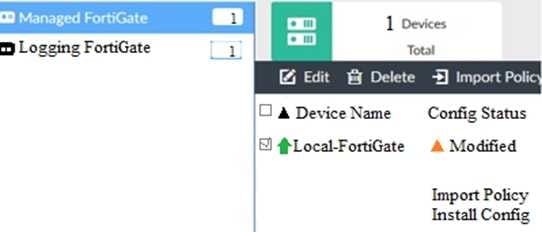
When using Install Config option to install configuration changes to managed FortiGate, which of the following statements are true? (Choose two.)
A. Once initiated, the install process cannot be canceled and changes will be installed on the managed device
B. Will not create new revision in the revision history
C. Installs device-level changes to FortiGate without launching the Install Wizard
D. Provides the option to preview configuration changes prior to installing them
An administrator, Trainer, who is assigned the Super_User profile, is trying to approve a workflow session that was submitted by another administrator, Student. However, Trainer is unable to approve the approving a workflow session?
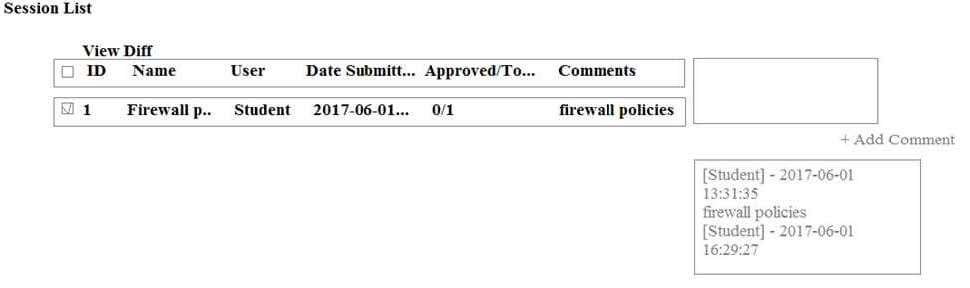
A. Trainer is not a part of workflow approval group
B. Trainer does not have full rights over this ADOM
C. Trainer must close Student's workflow session before approving the request
D. Student, who submitted the workflow session, must first self-approve the request

Home | Contact Us | About Us | FAQ | Guarantee & Policy | Privacy & Policy | Terms & Conditions | How to buy
Copyright © 2026 pass4itsure.com. All Rights Reserved