 TESTED 13 Jul
MCD-LEVEL1-DELTA Online Practice Questions and Answers
An API has been created in Design Center.
What is the next step to make the API discoverable?
A. Deploy the API to a Maven repository.
B. Publish the API from inside flow designer.
C. Publish the API to Anypoint Exchange.
D. Enable autodiscovery in API Manager.
Which one of them is NOT a flow in Mule?
A. sync flow
B. subflow
C. async flow
D. async sub flow
What is the purpose of API autodiscovery?
A. Enables API Manager to discover the published API on Anypoint Exchange.
B. Allows a deployed Mule application to connect with API Manager to download policies and act as its own API proxy.
C. Enables an API to be directly managed in API Manager.
D. Allows the Mule application to be automatically discovered on Anypoint Exchange.
What is a core characteristic of the Modern API?
A. API is rapidly prototyped following AGILE methodology.
B. API follows the RESTful architecture.
C. API is designed first using an API specification for rapid feedback.
D. API has a mechanism to accept feedback and suggestions for improvement.
Refer to the exhibits.
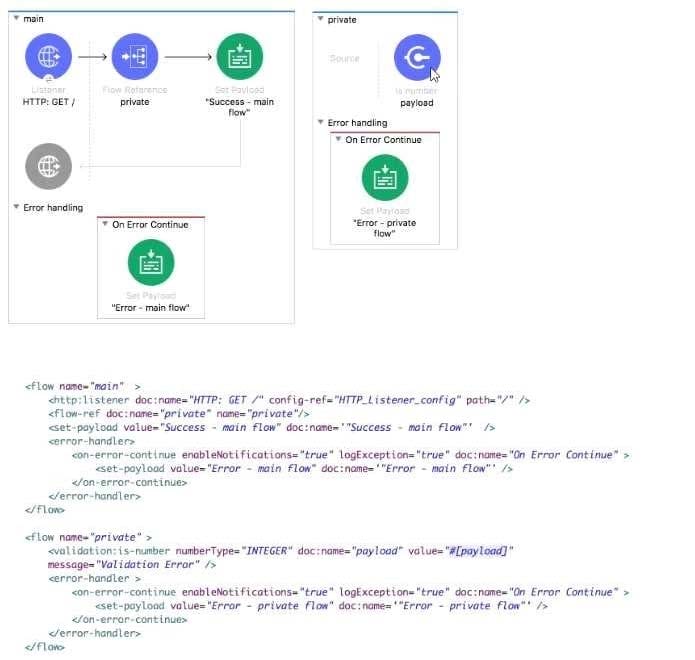
The Validation component in the private flow throws an error. What response message is returned to a client request to the main flow's HTTP Listener?
A. Error - private flow
B. Error - main flow
C. Success - main flow
D. Validation Error
Refer to the exhibit.
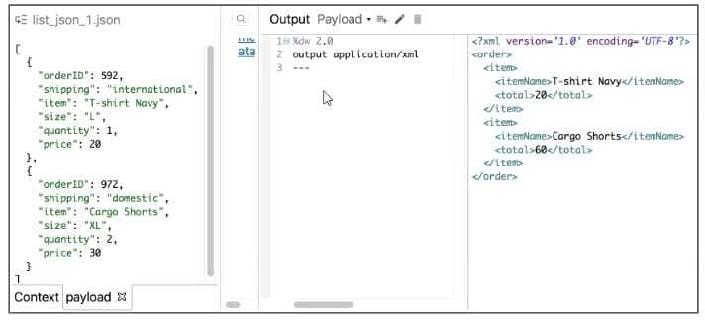
What Database expression transforms the input to the output?
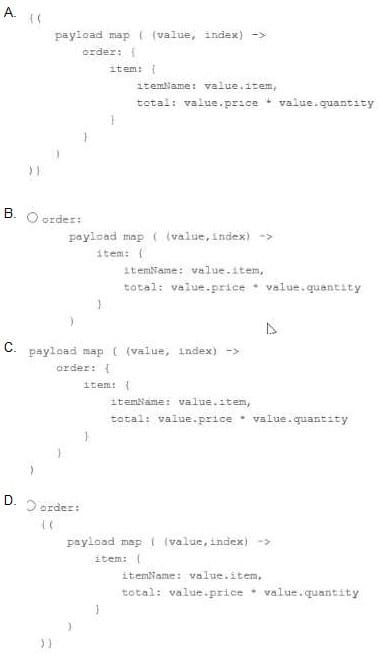
A. Option A
B. Option B
C. Option C
D. Option D
Why would a Mule application use the ${http.port} property placeholder for its HTTP Listener port when it is deployed to CloudHub?
A. Allows CloudHub to automatically change the HTTP port to allow external clients to connect to the HTTP Listener
B. Allows CloudHub to automatically register the application with API Manager
C. Allows MuleSoft Support to troubleshoot the application by connecting directly to the HTTP Listener
D. Allows clients to VPN directly to the application at the Mule application's configured HTTP port
Refer to the exhibits.
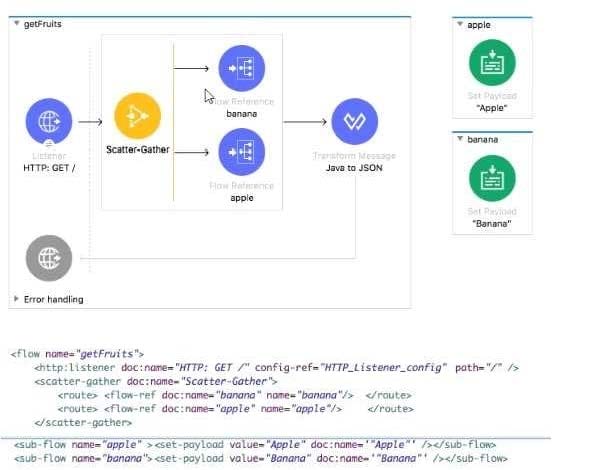
A web client submits a request to http://localhQst:8081. What is the structure of the payload at the end of the flow?
A. ['Banana', 'Apple']
B. { "0": "Banana", "1": "Apple" }
C. { "attributes": ..., "payload": ['Banana', 'Apple'] }
D. { "0": { "attributes": ..., "payload": "Banana" } "1": { "attributes": ..., "payload": "Apple" } }
A Mule application contains two HTTP Listeners, each configured for different API endpoints: http://acme.com/apis/orders and http: //acme.com/apis/customers. What base path value should be set in an HTTP Listener config element so that it can be used to configure both HTTP Listeners?
A. /apis/?
B. /apis/
C. /apis/orders|customers
D. /apis/*

Home | Contact Us | About Us | FAQ | Guarantee & Policy | Privacy & Policy | Terms & Conditions | How to buy
Copyright © 2026 pass4itsure.com. All Rights Reserved