 TESTED 13 Jul
IMANET-CMA Online Practice Questions and Answers
The effectiveness of a JIT system is often facilitated by the elimination of some commen forms of internal control.the elimination of which internal control is usually acceptable with a JIT system?
A. Prepation of hard copy receiving reports.
B. Voucher approval priot to paying accounts payable.
C. Two signatures required on large cheaks.
D. Locked doors on production areas.
Key Co.changed from a traditional manufacturing operation with a job-order costing system to a just-intime operation with a backflush costing system.what is(are)the expected effect(s)of these changes on key'inspection costs and recording detail of costs tracked to jobs in process?
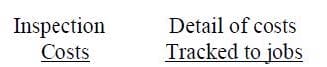
A. Decrease Decrease
B. Decrease Increase
C. Increase Decrease
D. Increase Increase
Starr Company uses material requirements planning (MRP) and manufactures a product with the following product structure tree.
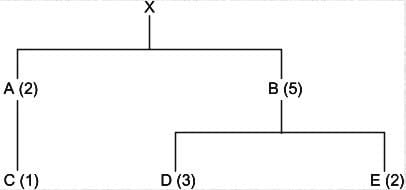
Starr has just received an order for 100 units of X, the finished product. The company has 20 units of X, and 50 units of E in inventory. How many units of E must Starr Starr purchase in order to fill the order?
A. 1,000
B. 830
C. 800
D. 550
In capital markets, the primary market is concerned with the provision of new funds for capital investments through
A. New issues of bond and stock securities.
B. Exchanges of existing bond and stock securities.
C. The sale of forward or future commodities contracts
D. New issues of bond and stock securities and exchanges of existing bond and stock securities
During the most recent fiscal year, Dongata Industries earned net income after tax of $3,288,000. The company paid preferred share dividends of $488,000 and common share dividends of $1,000,000. The current market price of Dogmata's common shares is $56 per share. and the shares are trading at a price-earnings rate of 8. How many common shares does Donate have outstanding?
A. 350,000
B. 400,000
C. 411.000
D. 469,714
In a decision analysis situation1 which one of the following costs is generally not relevant to the decision?
A. Incremental cost.
B. Differential cost.
C. Avoidable cost.
D. Historical cost.
When evaluating a capital budgeting project, a company's treasurer wants to know how changes in operating income and the number of years in the project's useful life will affect its breakeven internal rate of return. The treasurer is most likely to use
A. Scenario analysis.
B. Sensitivity analysis.
C. Monte Carlo simulation.
D. Learning curve analysis.
Briar Co. signed a government construction contract providing for a formula price of actual cost plus 10%. In addition, Briar was to receive one-half of any savings resulting from the formula price's being less than the target price of $2.2 million. Briar's actual costs incurred were $1,920,000. How much should Briar receive from the contract?
A. $2,060,000
B. $2,112,000
C. $2,156,000
D. $2,200,000
Which one of the following statements about the payback method of investment analysis is correct? The payback method
A. Does not consider the time value of money.
B. Considers cash flows after the payback has been reached.
C. Uses discounted cash flow techniques.
D. Generally leads to the same decision as other methods for long-term projects.
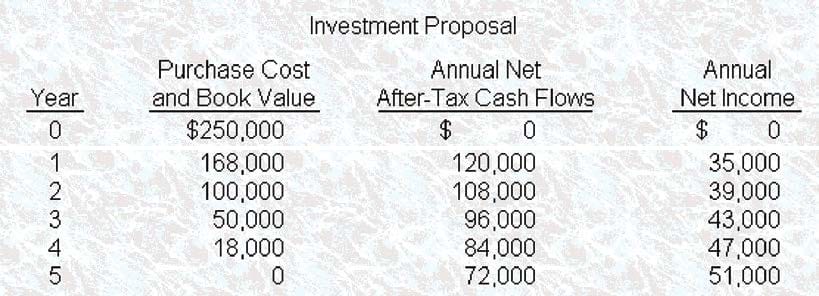
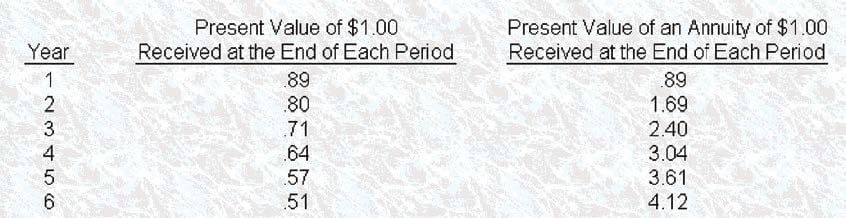
Jorelle Company's financial staff has been requested to review a proposed investment in new capital equipment. Applicable financial data is presented below. There will be no salvage value at the end of the investment's life and, due to realistic depreciation practices, it is estimated that the salvage value and net book value are equal at the end of each year. All cash flows are assumed to take place at the end of each year. For investment proposals, Jorelle uses a 12% after-tax target rate of return.
Discounted Factors for a 12% Rate of Return
The traditional payback period for the investment proposal is
A. Over5years.
B. 2.23 years.
C. 1.65 years.
D. 2.83 years.

Home | Contact Us | About Us | FAQ | Guarantee & Policy | Privacy & Policy | Terms & Conditions | How to buy
Copyright © 2026 pass4itsure.com. All Rights Reserved