 TESTED 23 Jul
CBAP Online Practice Questions and Answers
Fred's organization is using a plan-driven approach for the business analysis deliverables.
In this approach how will the requirements be captured?
A. Fred will use the appropriate documentation at the discretion of the business analysis team .
B. Fred will use the project management information system.
C. Fred will use whatever business analysis forms are most appropriate.
D. Fred will use standardized templates.
You are the business analyst for your organization. On your current project you'll be using the change-driven approach for defining requirements and gathering feedback.
Which of the following statements best describes the change-driven approach?
A. The change-driven approach favors defining requirements through experimentation.
B. The change-driven approach does not define the requirements until after a solution for the problem has been identified.
C. The change-driven approach favors defining requirements standardized templates.
D. The change-driven approach favors defining requirements through team interaction.
You are creating a model for your requirements.
Which model type categorizes and describes the people who directly interact with a solution?
A. Rules
B. User classes, profiles, or roles
C. Concepts and relationships
D. Events
Company A is a nation-wide leader in commercial demolition. Having just celebrated its 100th year of operations, the company decided to begin doing work internationally. The current system used for reporting company finances is unable to keep pace with the potential demands of doing work in geographically dispersed locations. Therefore, the company decided to replace its client-based Profit and Loss (PandL) reporting system with a more robust, web-based system. This will ensure transparency across the organization and enable better decision making.
The business analyst (BA) at Company A has recently completed several rounds of elicitation to determine the requirements for the new, web-based system. Over 1250 requirements were elicited. An initial Requirements Traceability Matrix (RTM) has been drafted, and a subset of the RTM can be seen below:
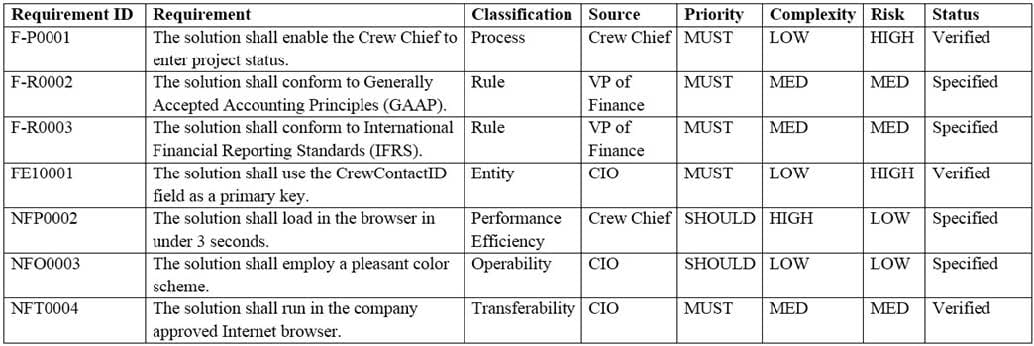
While verifying the requirements, the BA notices that Requirement ID NFO0003 does not meet the "unambiguous" or the "testable" characteristics of requirements quality. The BA plans to re-write the requirement. Which of the following requirements is both unambiguous and testable?
A. "The solution shall employ a blue background."
B. "The solution shall employ a background color blue (HEX #0000FF)."
C. "The solution shall employ a high-contrast between background and text."
D. "The solution shall employ a background color that is viewable to a colored-blind user."
A martial arts organization has been expanding throughout the mid-Atlantic states and has hired a business analyst (BA) to create a system that will enable the organization to manage its growing needs. The following list describes some of
the operations of the martial arts organization:
The martial arts organization offers a variety of seminars to trainees that span the entire spectrum of the martial arts training system.
Each seminar is made up of a set of techniques.
Coaches in the martial arts organization are assigned seminars to teach according to the area that they specialize in and their availability.
The martial arts organization publishes and maintains a web-based calendar of the different seminars (and the assigned coaches) every quarter for the trainees to view.
The seminar administrator in the martial arts organization manages the seminars (including seminar content), assigns seminars to coaches, and defines the seminar schedule.
To ensure understanding of the business need, the BA has created three Unified Modelling Language (UML) diagrams, which are shown below:
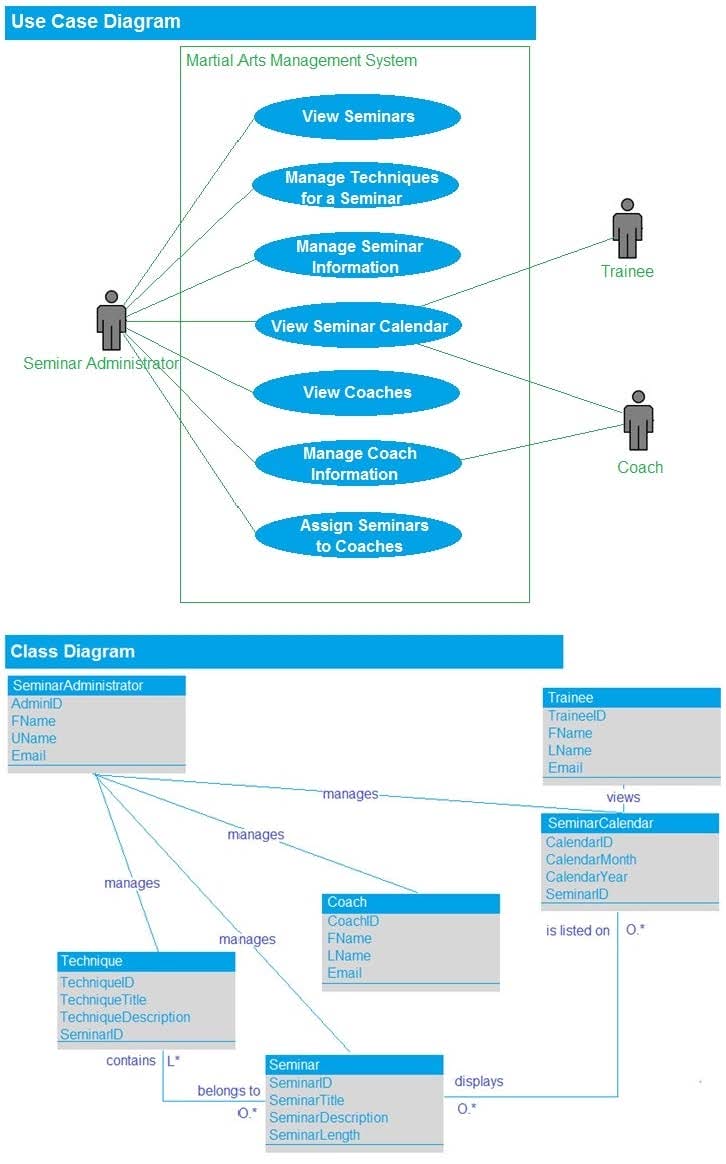
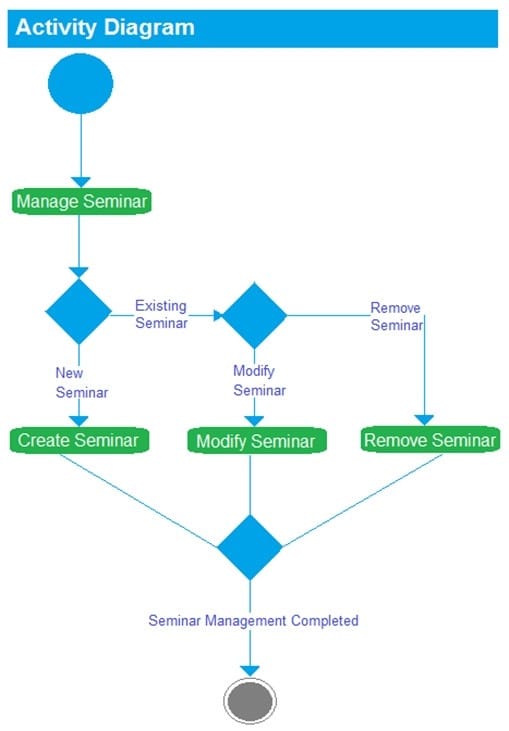
The BA is finalizing the definition of the requirements architecture by understanding how requirements relate to each other. A key component that must be apparent in all three diagrams is that none of the requirements be linked in different or conflicting ways. What relationship quality criterion does this represent?
A. Correct
B. Unambiguous
C. Defined
D. Necessary
A business analyst (BA) has defined a business analysis approach and presented the documents to the sponsors, the senior executives, the domain experts, the project manager, and the head of technology, to obtain agreement from all. At this juncture, the project manager objected to some of the estimates determined in the budget and refused to agree with the estimates. Which guideline or tool, if followed by the BA, would have helped in avoiding such disagreements?
A. Risk Analysis and Management
B. Business Analysis Performance Assessment
C. Requirements Classification Schema
D. Stakeholder Engagement Approach
The performance of the business analysis team has been reviewed by management to determine areas for improvement. The manager would like to help the business analysts (BAs) develop their skills and address the corrective actions.
What is a technique that may help achieve this goal?
A. Lessons learned
B. Team restructure
C. Weekly meetings
D. Team building
After releasing its beta version of a travel assistance mobile application, a travel company has received feedback from a public survey proposing new features. The company is struggling with the large number of ideas and would like to make a decision on which to consider in the next implementation cycle.
Which of the following considerations should be used first for filtering ideas?
A. Measurability of customer satisfaction
B. Cost of implementation
C. Alignment with solution scope
D. Time to market
Which of the following process models needs to complete each set of tasks in one phase before moving into the next phase in a project development life cycle?
A. Procedural model
B. Evolutionary model
C. Spiral model
D. Waterfall model
Bob and Susan are business analysts for their organization. They are examining two materials that could be used in an upcoming project. They are testing the materials and measuring the results of each test to compare the materials to each other. This process will help Bob and Susan determine which material is best for their upcoming project.
What type of process are Bob and Susan completing with these materials?
A. Feasibility study
B. Stress test
C. Alternative identification
D. Benchmarking

Home | Contact Us | About Us | FAQ | Guarantee & Policy | Privacy & Policy | Terms & Conditions | How to buy
Copyright © 2026 pass4itsure.com. All Rights Reserved